_edited.png)
Best Lifestyle Changes to Prevent Vaginal Dryness | Hydration, Diet, & Exercise
- Sep 24, 2025
- 4 min read
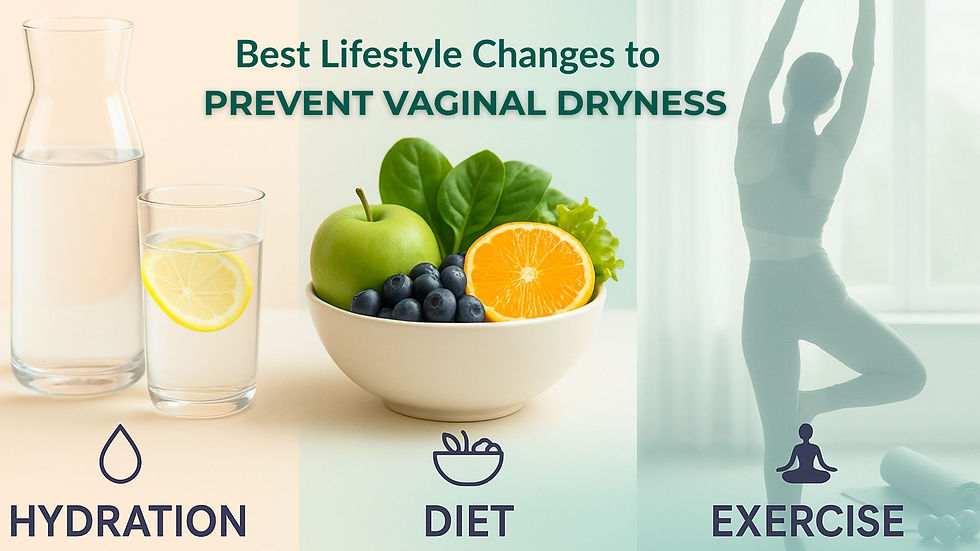
Vaginal dryness is a concern many women experience — not only during menopause but also at different stages of life. It can be linked to hormonal shifts, stress, dehydration, medications, or even lifestyle habits. While topical treatments like lubricants and moisturizers provide short-term relief, long-term comfort often depends on everyday habits.
Simple lifestyle changes to prevent vaginal dryness — including better hydration, balanced diet, and regular exercise — can make a powerful difference. Supporting your body’s natural lubrication from within ensures not only vaginal comfort but also better overall reproductive and sexual health.
Restore your comfort — explore trusted vaginal moisturizers today.
Product Name | Shop Online |
Relactagel Vaginal Gel | |
Gynatrof Natural Vaginal Moisturizer | |
Clotrimaderm Vaginal Cream |
Why Lifestyle Matters in Vaginal Dryness Prevention
Your body’s natural moisture depends on more than estrogen levels. A healthy vaginal environment is influenced by
Hydration: Adequate water intake keeps mucous membranes (including vaginal tissues) supple and prevents vaginal dryness.
Diet: Nutrient-rich foods provide essential fatty acids, antioxidants, phytoestrogens, and vitamins that support tissue elasticity.
Exercise: Improves blood circulation to pelvic tissues, helping maintain lubrication / lubrication support.
Daily habits: From stress levels to hygiene choices, small routines can either support or disrupt vaginal health.
This means your everyday choices — from how much water you drink to what you eat for dinner — can directly influence whether your body produces enough natural moisture. These small changes serve as some of the best natural remedies for vaginal dryness.
Why Hydration Is Essential
Just like your skin and eyes, the vaginal tissues rely on adequate hydration to stay supple and comfortable. When your body is low on fluids, mucous membranes (including those in the vagina) can become less elastic, thinner, and drier, leading to irritation, burning, or itching.
According to the National Institutes of Health (NIH), staying hydrated supports healthy circulation and mucosal tissue function — both crucial for vaginal comfort and natural lubrication.
How Much Water Do You Need?
General guideline: 2–2.5 liters (8–10 cups) daily for most adults.
Increase intake in hot climates, during exercise, or if you consume diuretics like coffee or alcohol.
Signs you need more water: darker urine, dry lips/skin, fatigue, and increased vaginal dryness.
Hydrating Foods That Help with Vaginal Dryness
Hydrating Foods | Why They Help |
Cucumber | 95% water content, refreshing hydration boost |
Watermelon | High water + antioxidants for tissue repair |
Oranges & Citrus | Vitamin C supports collagen in vaginal tissue |
Lettuce & Leafy Greens | High water + minerals for circulation |
Strawberries | Hydrating + antioxidant-rich |
Drinks to Limit
Alcohol → depletes fluids and worsens hormone imbalance.
Caffeinated drinks (coffee, cola, energy drinks) → mild diuretic effect, pulling water from tissues.
Sugary sodas → spike blood sugar and increase inflammation that can affect vaginal health.
Diet for Natural Vaginal Moisture
What you eat directly affects tissue health, hydration, and hormonal changes. Certain nutrients act as home remedies for vaginal dryness and promote balance:
Omega-3 Fatty Acids
Found in salmon, chia seeds, flaxseeds, and walnuts. Improve circulation and maintain tissue flexibility. [Source]
Vitamin E & Healthy Fats
Foods like avocados, almonds, sunflower seeds, and natural oils (coconut oil, olive oil, almond oil) help repair tissues and act as gentle, natural moisturizers / vaginal moisturizers. Some studies suggest vitamin E supplementation may reduce postmenopause dryness.
Phytoestrogens
Plant compounds in soy, chickpeas, flaxseeds, and lentils mimic mild estrogen activity, helping counter estrogen decline and preventing vaginal atrophy.
Hydrating Fruits & Vegetables
Water-rich foods like cucumber, celery, and berries support collagen production and mucosal elasticity for better vaginal comfort.
Exercise for Vaginal Health
Movement isn’t just for fitness — it also supports hormone balance and circulation, which are vital for preventing vaginal dryness.
Pelvic Floor Exercises (Kegels): Improve blood flow, elasticity, and intimacy comfort.
Cardio: Walking, cycling, or swimming enhances overall blood flow, delivering nutrients to vaginal tissue.
Yoga & Stress Reduction: Lowers cortisol, balances hormones, and reduces sexual discomfort linked to stress.
Foods & Movements That Support Vaginal Moisture
Category | Examples | Benefit |
Omega-3s | Salmon, chia seeds, walnuts | Elasticity & lubrication |
Avocado, almonds, olive oil | Tissue repair & hydration | |
Phytoestrogens | Soy, flaxseeds, chickpeas | Hormone balance support |
Hydrating foods | Cucumber, oranges, berries | Boost mucosal hydration |
Pelvic floor | Kegels, squats | Increases pelvic blood flow |
Cardio | Walking, cycling, swimming | Improves circulation |
Mind-body | Yoga, meditation | Reduces stress-driven dryness |
Lifestyle Habits That May Worsen Vaginal Dryness
❌ Over-washing or using harsh soaps → Strips away fragrance-free products / gentle products that protect natural oils.
❌ Douching → Upsets vaginal pH and microbiome.
❌ Synthetic, tight underwear → Increases irritation instead of comfort.
❌ High stress and poor sleep → Lead to hormonal changes and hormone imbalance.
❌ Excess alcohol or caffeine → Dehydrates tissues, worsening dryness.
FAQs
Q: What foods help with vaginal dryness?
Foods rich in omega-3 fatty acids (salmon, flaxseeds), vitamin E (avocados, almonds), and phytoestrogens (soy, chickpeas) support natural vaginal moisture.
Q: Can drinking more water help with vaginal dryness?
Yes. Proper hydration supports mucous membranes throughout the body, including vaginal tissues. Aim for 8–10 cups daily plus water-rich foods.
Q: Does exercise improve vaginal lubrication?
Absolutely. Pelvic floor exercises and regular cardio improve blood flow, which helps keep vaginal tissue elastic and moist.
Q: Are phytoestrogens safe for preventing dryness?
For most women, moderate amounts of soy, flax, or chickpeas are safe and beneficial. Those with hormone-sensitive conditions should consult a healthcare provider first.
Q: What lifestyle habits make vaginal dryness worse?
Over-washing, douching, dehydration, stress, alcohol, and smoking can all contribute to dryness.
Conclusion
Vaginal dryness isn’t just a symptom — it’s a signal that your body needs support. By focusing on hydration, natural oils, phytoestrogens, vitamin E, and pelvic floor exercises, you can improve vaginal comfort and reduce sexual discomfort.
Small, consistent changes — like sipping water through the day, eating omega-3s, or practicing Kegels — are some of the most effective natural remedies for vaginal dryness.
If needed, you can also explore water-based lubricants and other home remedies for vaginal dryness available at Pharmacy24 to complement your wellness routine.


Comments